NANOVEAU  #002

The Sound of Inevitability—Why Nanotech Will Happen


COLUMN INTRODUCTION

Nanoveau is a new column by Nano author John Robert Marlow. This column will cover the science, the speculation, and (occasionally) the politics of nanotechnology and related topics. If you want to know what nanotech is about, and how and why it will change everything we know—Nanoveau is for you. The name Nanoveau is a combination of nanotechnology and nouveau, the French word meaning new. This column is presented in cooperation with Nanotechnology Now.

To read all columns, visit the Nanoveau homepage.


NANOVEAU #002:  The Sound of Inevitability—Why Nanotech Will Happen

by John Robert Marlow

http://nanoveau.com

*  subscription info  *


"Do you hear that, Mr. Anderson? That is the sound of inevitability."
—Agent Smith in The Matrix [1]


OVERVIEW

Nanotechnology offers Mankind almost unbelievable benefits—and all but unimaginable horrors. Too often, one or the other extreme is depicted with little explanation of the underlying realities. Because of this, those newly exposed to the concepts involved sometimes dismiss nanotech as an unworkable fantasy—or as something too far in the future to be concerned about now. The first column
(Digital Matter—Understanding Nanotechnology) explained how nanotechnology will work, and listed some of the benefits and hazards involved. This column explains why nanotech's development is inevitable—and why the technology itself warrants immediate attention.


COMMERCIAL FORCES

A recent National Science Foundation paper authored by M.C. Roco, NSF's Senior Advisor for Nanotechnology, estimates that by 2015, nanotech will be a $1 trillion industry employing two million workers.
[2] The reason for this is simple: in addition to making it possible to manufacture present-day products faster and cheaper than they can be made today, nanotechnology will enable those who use it to create entirely new products which cannot be manufactured (or equaled) in any other way. Consequently, companies which take advantage of nanotech's unique capabilities stand to reap enormous profits—while those which fail to adapt are likely to be destroyed by more savvy competitors offering far better and often incomparable products at much lower prices. The message to industry is clear: adapt or die.

Lured by projections such as Roco's, and by the promise of near-term benefits in specialized areas, a virtual Who's Who of multibillion-dollar corporations have chosen to adapt by investing in nanoresearch. These include such household names as Alcoa, Bayer, Boeing, Cargill, DaimlerChrysler, Dow Chemical, Dupont, Eli Lilly, General Motors, Hewlett-Packard, Hitachi, IBM, Intel, Lockheed Martin, Lucent Technologies (Bell Labs), Merck, MITRE Corporation, Monsanto, Motorola, Raytheon, Samsung, Texas Instruments, Toyota, United Technologies, and Xerox PARC.
[3] The sheer variety of companies involved indicates the unprecedented and extremely broad range of fields impacted by nanotechnology.

A quick survey of major U.S. government entities with nanoresearch programs covers a similarly broad spectrum: the Air Force Office of Scientific Research; Defense Advanced Research Projects Agency (DARPA); Department of Commerce; Department of Energy (DOE); NASA; National Institutes of Health (NIH); National Institute of Standards and Technology (NIST); Naval Research Laboratory; National Science Foundation (NSF); Office of Naval Research, and; U.S. Army Research Laboratory.
[4]

A number of less-familiar companies devoted entirely to nanodevelopment have also appeared—among them Molecular Manufacturing Enterprises, Nanologic, Oxford Nanotechnology, ZettaCore (whose board of directors includes Intel co-founder Les Vadasz), and Zyvex (corporate slogan: "assembling tomorrow..."). [5]


SECURITY CONCERNS

For those concerned with issues of national security, the rationale driving nanodevelopment is both grim and inescapable. Though quoted in the
first Nanoveau column, the words of Admiral David E. Jeremiah—Vice-Chairman (ret.) of the Joint Chiefs of Staff and the second highest-ranking military officer in the United States—bear repeating here: "military applications of molecular manufacturing [another term for nanotechnology] have even greater potential than nuclear weapons to radically change the balance of power." [6] Those familiar with the technology realize this is an understatement. (A detailed exploration of nanosecurity issues may be found in the author's article Nanosecurity and the Future (if Any)).

Thus it came as no surpise when Clifford Lau, senior science adviser in the Pentagon's office of basic research and president of the IEEE's Nanotechnology Council, recently confirmed that "nanotechnology is one of the highest priority science and technology programs in the Defense Department." The Pentagon, he went on to say, expects nanotech to affect every major weapons system, is coordinating research across all military branches to transition nanotech from basic research to deployment—and is exceeding its allotted budget in this area to do so. [7]

In addition to the defense-related agencies and labs mentioned above, nanoresearch is now being conducted at the following U.S. National Laboratories: Ames Laboratory Condensed Matter Physics Group (Department of Energy); Argonne National Laboratory; Brookhaven National Laboratory; Center for Advanced Research in Biotechnology (CARB); Fermi National Accelerator Laboratory; Idaho National Engineering & Environmental Laboratory (INEEL); Lawrence Livermore National Laboratory (LLNL); Los Alamos National Laboratory (LANL); NanoStructures Laboratory (MIT); Nadrian C. Seeman's Laboratory (NYU); Nanostructure Laboratory (Princeton University); Sandia National Laboratories; Thermal Spray Lab (TSL).
[8] Many of these labs are noted for weapons research; some of them conducted the research leading to the atomic and hydrogen bombs. [9]

From a military standpoint, the situation is analogous to that which existed at the dawn of the Atomic Age, when major nations first realized that an atom bomb was possible, and set out to develop it. Whether the motivation for that development was a desire for greater power over other nations, a fear of other nations wielding that same power, or some combination of the two—the end result was the same: the creation of the atom bomb became inevitable. Likewise, even without the promise of staggering commercial benefits, nanotechnology is inevitable for military reasons alone.

A unique and disturbing feature of nanotechnology is that there is no fundamental theoretical difference between civilian and military nanotech; absent some built-in safeguards, the same device used to build playpens could be used to create horrific weapons.
[10] Obviously there will be safeguards [11], but this situation, in a sense, places the military in competition with industry when it comes to developing certain aspects of the technology (such as assemblers/disassemblers)—and will tend to accelerate efforts in both arenas as nanodevelopment advances toward maturity. [12]


NANOSALVATION, NANODESTRUCTION

James Cameron, the world's leading cinematic high-tech visionary, sums it up nicely. "Nanotechnology is unbelievably exciting and incredibly dangerous," said Cameron in a recent interview with
Nanoveau author John Robert Marlow. [13] Though quick to point out that he doesn't consider himself an expert in the field, Cameron likens nanotech's potential for good and evil to that inherent in all major advances. "From the harnessing of fire," he explains, "every time we've come up with a new technology, we've figured out a way to use that technology to make life better, and to make it worse. And the net charge always seems to be about zero; it seems to make life better for a while, then worse for a while."

Unlike previous advances, however, nanotech has the capability to swiftly—and irrevocably—tip the scales one way or the other. "Nanotechnology could be our salvation or our destruction," Cameron confirms, and goes on to make what is perhaps the best argument of all for nanodevelopment: "But it's absolutely necessary as our salvation. We've put ourselves in a role of stewardship of a biosphere which is already compromised by our technology—and the only solution to that will be a technology solution because of the burden of six billion, probably going on ten billion people by the end of this decade. So the only real salvation for the biosphere, to that kind of burden and to the things we've done to it already, will be a technological solution. We're already committed; we have to play the hand technologically. There's no going back to the Garden."

Indeed, though it has not yet been released, it is already too late to put the nanogenie back in the bottle.


CONCLUSION

The benefits for those able to develop and use nanotechnology are almost unlimited; the potential downside for those who fail to do so, nearly unimaginable. Worldwide, according to the National Science Foundation, government spending on nanotech is up over 700% since 1997.
[14] The United States alone recently committed over $5 billion to nanotech research (this figure does not include the black nanobudget, if any). [15] Private industry is spending billions more. New facilities are being constructed. [16] Nobel prizes have been awarded for work in the field. [17]

Nobel laureate physicist and Manhattan Project veteran Richard Feynman called nanotechnology unstoppable [18]; Nobel laureate chemist Richard Smalley says its impact will be more important than many of the 20th century's major advances combined. [19] The military considers it more crucial than nuclear weapons [20]; major corporations, an essential step ensuring future profits. [21] The technical roadmap has already been drawn (by Eric Drexler in Nanosystems) [22], and is now being traveled.

Given all of this—can nanotechnology not happen?


IN THE NEXT NANOVEAU...

Don't miss
Nanoveau #003:  Nanomedicine, explaining how nanotechnology will make it possible to eradicate disease, repair genetic errors, and extend the human lifespan indefinitely.


###

Thanks to Chris Phoenix of the Center for Responsible Nanotechnology for vetting this column.

To subscribe to Nanoveau, send an email with "subscribe nanoveau" as the subject line to:
subscribe@nanoveau.com and you will receive an email with a direct link to each new column.
Your email address will remain private.


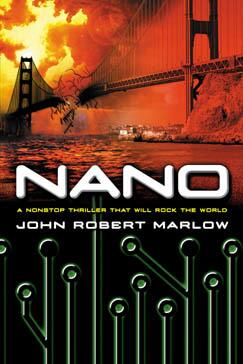
NANO: Click here for free excerpts, summary, review quotes, and more

by the author of
Nanoveau


back to top


NOTES

[1]
The Matrix.

back


[2] National Science Foundation estimate presented in
Government Nanotechnology Funding: An International Outlook, by M.C. Roco, NSF's Senior Advisor for Nanotechnology.

back


[3] Many lists of nanotech-involved companies may be found on the net, including those on the following pages:
Nanotechnology Now Nanotechnology Companies List; Nano Investor News Company Profiles, and; the NSF-funded Loyola College WTEC Nanotechnology Database (which may be somewhat dated).

back


[4] One listing of U.S. government entities involved in nanotech research appears in the NSF-funded
Loyola College WTEC Nanotechnology Database. Note that this source may be somewhat dated.

back


[5] Many lists of nanotech-involved companies may be found on the net, including those on the following pages:
Nanotechnology Now Nanotechnology Companies List; Nano Investor News Company Profiles, and; the NSF-funded Loyola College WTEC Nanotechnology Database. Zyvex was the first company to declare itself in the business of developing a molecular assembler.

back


[6]
Admiral David E. Jeremiah, Nanotechnology and Global Security (address to the Fourth Foresight Conference on Molecular Nanotechnology; November 9, 1995). A detailed exploration of nanosecurity issues may be found in the author's article Nanosecurity and the Future (if Any)); A fictional portrayal of nanoweapons appears in the author's novel Nano.

back


[7] Quoted in
Pentagon official says nanotechnology a high priority (GoveExec.com: April 19, 2004).

back


[8] One listing of U.S. National Laboratories involved in nanotech research appears in the NSF-funded
Loyola College WTEC Nanotechnology Database. Note that this source may be somewhat dated.

back


[9]
Los Alamos National Laboratory, Sandia National Laboratory, and Lawrence Livermore National Laboratory.

back


[10] This
EE Times article explains the basics of the 21st Century Nanotechnology Research and Development Act, which is also the subject of this White House Press Release of December 3, 2003. The new law authorizes $3.7 billion dollars in expenditures for FY 2005-2008; another $849 million will be spent in FY 2004.

back


[11] See, for example, the
Molecular Nanotechnology Guidelines proposed by the Foresight Institute. (For an explanation of why any such guidelines may prove futile, see the author's article Nanosecurity and the Future (if Any).)

back


[12] Indeed, as
K. Eric Drexler points out in the author's article Nanosecurity and the Future (if Any): "The natural course of events—absent a strong, widespread understanding of the issues at stake—would be for the world to drift into an arms race as nanotechnology matures toward powerful military capabilities." Most if not all of those thinking about this issue agree.

back


[13] Interview conducted at the American Association for the Advancement of Science meeting in San Francisco (February 19, 2001; San Francisco Hilton).

back


[14] Figure cited in
Government Nanotechnology Funding: An International Outlook, by M.C. Roco, NSF's Senior Advisor for Nanotechnology. Note that this paper was published in mid-2003, and that the 700% increase cited does not include the $3.7 billion dollars subsequently authorized by the United States' 21st Century Nanotechnology Research and Development Act.

back


[15] This
EE Times article explains the basics of the 21st Century Nanotechnology Research and Development Act, which is also the subject of this White House Press Release of December 3, 2003. The new law authorizes $3.7 billion dollars in expenditures for FY 2005-2008; another $849 million will be spent in FY 2004. Prior to this, the National Nanotechnology Initiative authorized an initial $500 million.

back


[16]
Richard E. Smalley, Prepared Written Statement and Supplemental Material of R.E. Smalley, as presented to the House Committee on Science, Subcommittee on Basic Research hearing of June 22, 1999 (Nanotechnology: The State of Nano-Science and Its Prospects for the Next Decade) in support of what became the National Nanotechnology Initiative. An online transcript of the hearing is available.

back


[17] The
1996 Nobel Prize in Chemistry was awarded jointly to Robert F. Curl, Sir Harold W. Kroto, and Richard E. Smalley for their co-discovery of fullerines, a third allotrope of carbon.

back


[18] Feynman, a physicist who had worked on the Manhattan Project to develop the first atomic bomb, noted that "the principles of physics, as far as I can see, do not speak against the possibility of maneuvering things atom by atom. It is not an attempt to violate any laws; it is something, in principle, that can be done; but in practice, it has not been done because we are too big." He went on to describe this atomic-level manipulation (the term nanotechnology had yet to be coined) as "a development which I think cannot be avoided." (
Richard P. Feynman, There's Plenty of Room at the Bottom: An Invitation to Enter a New Field of Physics; address to the 1959 Annual Meeting of the American Physical Society, December 29, 1959 at the California Institute of Technology (first published in Caltech's Engineering and Science, February, 1960).)

back


[19] "The impact of nanotechnology on health, wealth, and lives of people will be at least the equivalent of the combined influences of microelectronics, medical imaging, computer-aided engineering and man-made polymers [plastics] developed in this century." (
Richard E. Smalley, Prepared Written Statement and Supplemental Material of R.E. Smalley, as presented to the House Committee on Science, Subcommittee on Basic Research hearing of June 22, 1999 (Nanotechnology: The State of Nano-Science and Its Prospects for the Next Decade) in support of what became the National Nanotechnology Initiative. An online transcript of the hearing is available.

back


[20] See statements by U.S. Joint Chiefs Vice-Chairman Admrial David E. Jeremiah and Pentagon office of basic research senior science adviser Clifford Lau, cited elsewhere in this column.

back


[21] See, for example, the prominent corporations listed
above.

back


[22]
K. Eric Drexler, Nanosystems: Molecular Machinery, Manufacturing, and Computation.

back


ABOUT THE AUTHOR:  John Robert Marlow is a freelance journalist, screenwriter, and author of the novel Nano. All columns, fully-sourced, can be found on the Nanoveau homepage—along with a nanofaq, nanolinks, and more. The content of this column is copyright © by John Robert Marlow, all rights reserved. The first column (Digital Matter—Understanding Nanotechnology) may be freely copied subject to the conditions stated on the Nanoveau rights page, which also contains syndication information.


next Nanoveau
coming soon


back to top


Website question, problem, or comment? Contact gorgon@nanoveau.com


Except where otherwise noted, the entire content of this website is copyright © by John Robert Marlow, and all rights are reserved. Permission is granted to reproduce the summary, bio, and cover image above provided the user includes a link to this page and does not edit, alter, or shorten the text or image being used (image size may be changed).

Concept, visual aspect, site design and content management by John Robert Marlow. Site maintained by gorgon.


Nanoveau: the nanotechnology column